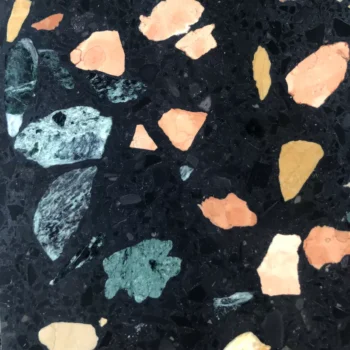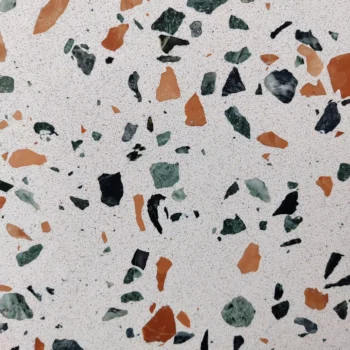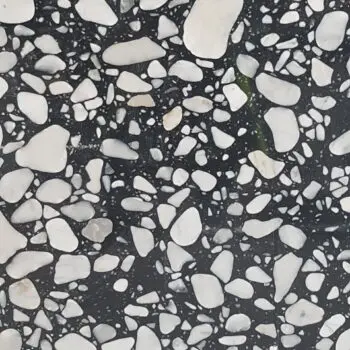
Terrazzo
Diespeker has been working with terrazzo since the company was founded in 1881. Today, our company is widely regarded as the UK’s (if not Europe’s) leading experts, stocking the widest range in the country.

No-one does terrazzo like Diespeker
Diespeker both makes and imports terrazzo. Our experience from almost 150 years of working with terrazzo has given us unparalleled expertise in all aspects of manufacture and installation. Here we’re delighted to provide background information about the material that we love to introduce clients to.
What is terrazzo?
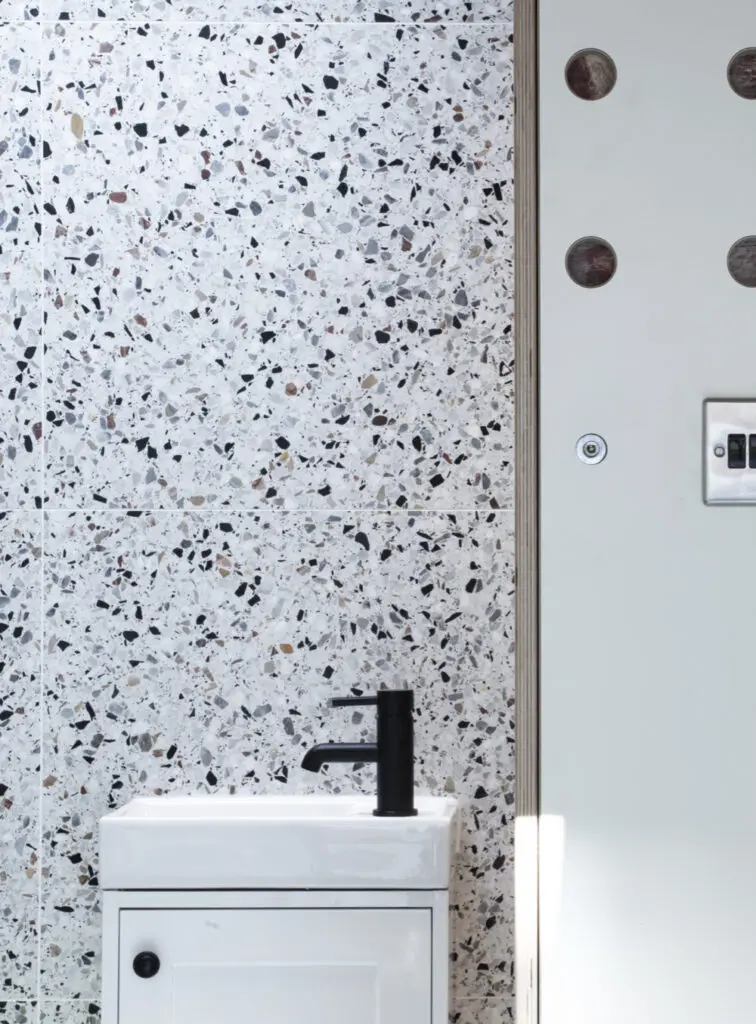
Said to date back to Roman times, or, some believe, Ancient Egypt, terrazzo has been used in some form or another for many centuries. It became popular in the UK in the mass of post-war building projects as a cost-effective alternative to popular stones marble and granite. More recently, terrazzo has enjoyed a revival, due to its resilience and easy maintenance, able to deliver aesthetic versatility, technical performance, and, increasingly, sustainability. Whether poured in situ or cast into tiles, panels or bespoke elements, terrazzo also offers a wide range of design possibilities and a proven track record for use in high-traffic commercial environments as well as in the home.
London-made terrazzo
Diespeker terrazzo can be bespoke made to virtually any specification, using traditional hand casting skills. The process is labour intensive, requiring close attention throughout the process. Intense polishing at the end of the process allows the material to come into its own. The real attraction of this hand cast material is the way it can be used to create truly unique designs. Any number of colour combinations is possible, and special additions to the mix will create an exclusive product.
Imported terrazzo
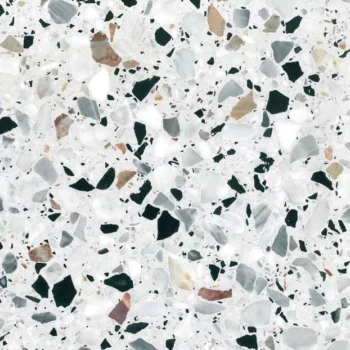
Importing quality terrazzo is cost effective for clients. Our specialist suppliers have the mechanised capability to produce thick sheets of the material and then compress them before cutting them into slabs and tiles. Diespeker has exclusive rights to original designs from a number of these suppliers.
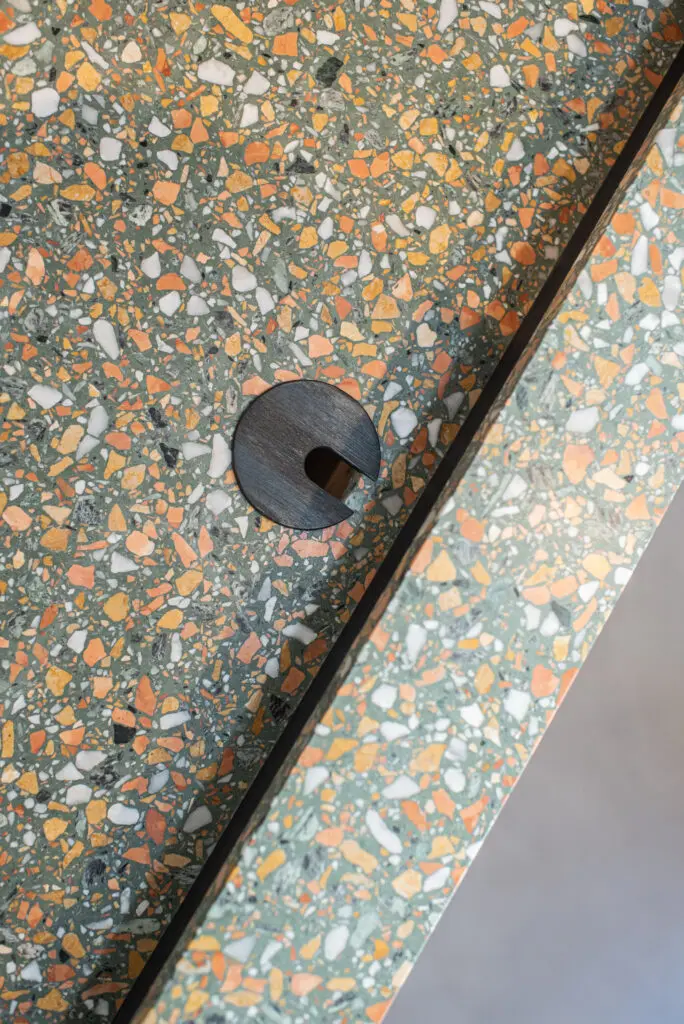
For either bespoke made or imported terrazzo, details such as grooves and insets are introduced at our London factory using state-of-the-art Italian cutting machinery.
Where can terrazzo be used?
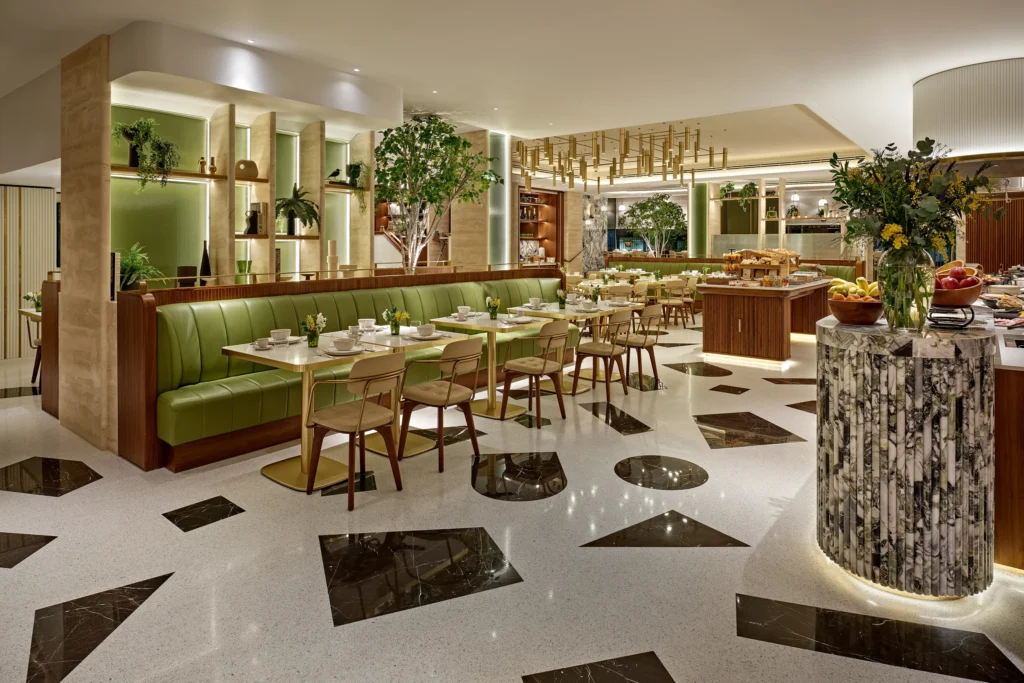
Terrazzo is a popular choice for durable flooring in high-traffic spaces such as shopping centres, stations, hotels and schools, as well as healthcare settings as it is easy to keep clean, particularly as a poured floor. Due to its high conductivity, terrazzo works well with underfloor heating.
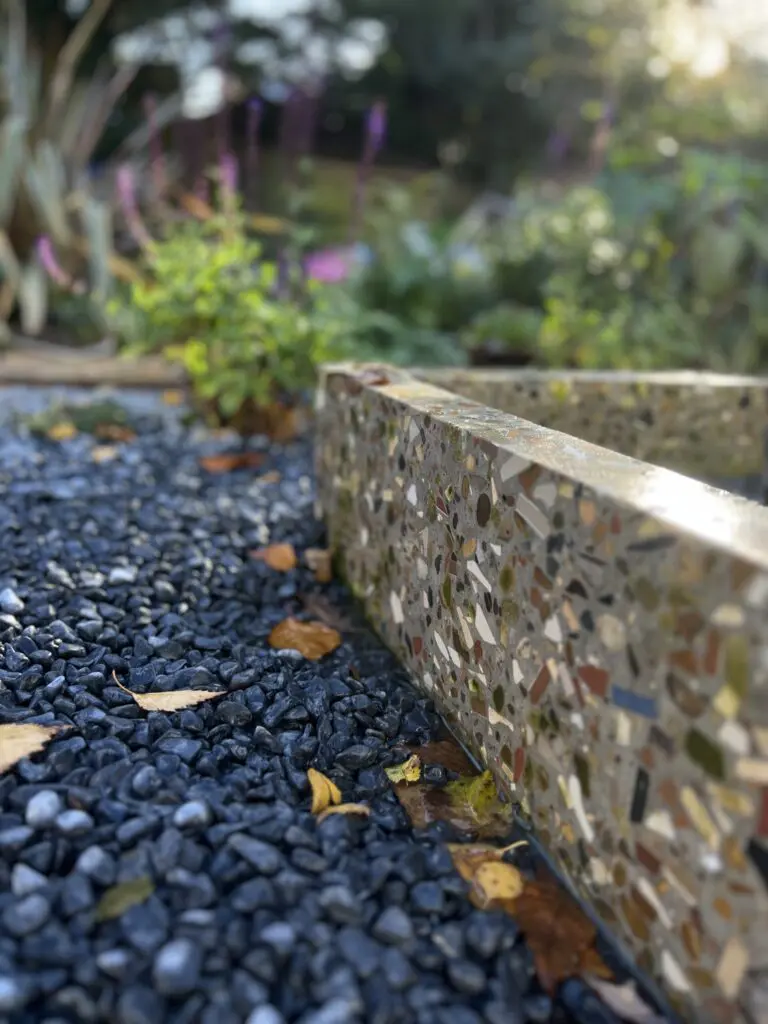
It can also be poured into moulds to form architectural elements. This is known as precast and is used for:
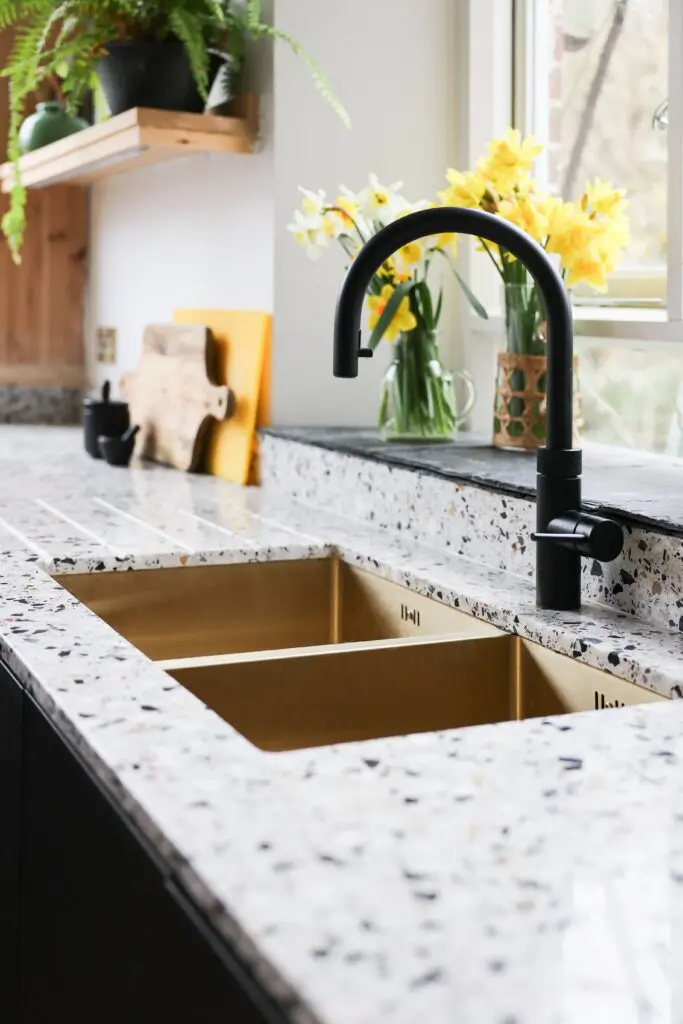
- countertops in bars, restaurants and residential kitchens
- plinths for retail displays and art
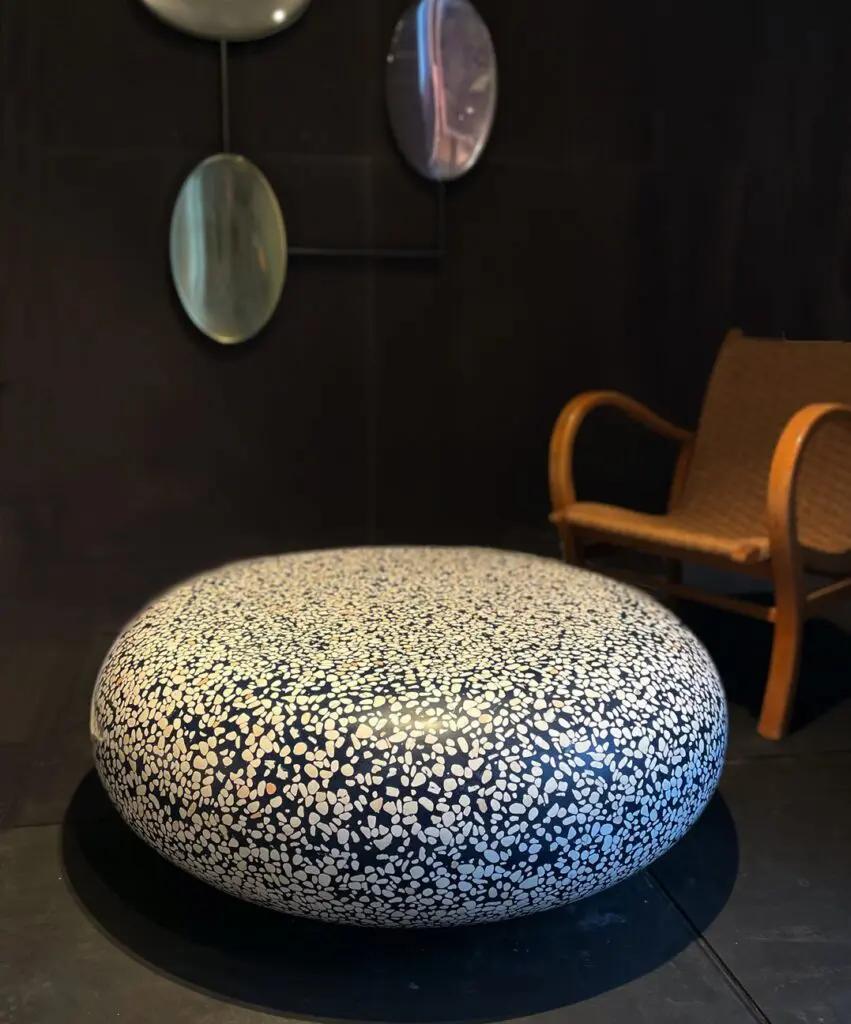
- original bespoke furniture such as seating and tables
- treads and risers for stairs
- cladding (interior and exterior)
Cement-based vs resin-based terrazzo
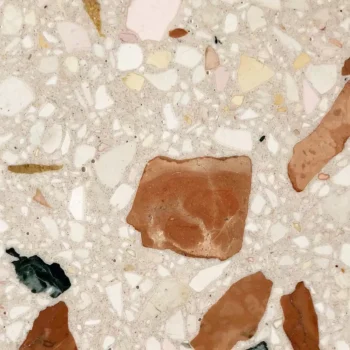
Cement is the traditional binder for terrazzo. Marble chippings or other aggregate are added into a grey or white Portland cement base, which can be left natural or dyed using pigments.
Resin-based terrazzo has been around since the 1960s. It is composed of epoxy resin, aggregate and pigments, though newer bio-based resins are now available too, which are more environmentally friendly.
While cement has many good qualities, including durability and aesthetics, resin is becoming increasingly popular due to its resistance to cracking and crazing, and its greater practicality as a lighter material.
Design options
With bespoke terrazzo, there are many options for what can be used as aggregate. From coloured glass and shells to semi-precious stones and household objects – and even construction waste. Dyes too, can be added to create unique designs.
It’s important to understand that some materials cannot be used with terrazzo, particularly porous items or minerals that might cause discolouration. Diespeker makes samples of every bespoke design to ensure integrity prior to final production.
Terrazzo finishes
The most popular finish is polished, which is an aesthetically pleasing option for residential homes, hotels and reception areas. Honed provides a matte finish that is more understated but provides a practical solution for wet rooms and bathrooms.
Brushed terrazzo offers a softer texture that can work well for flooring. A sandblasted finish enables more slip resistance which works well used around swimming pools and commercial kitchens.
Is terrazzo sustainable?
Terrazzo is becoming more of a sustainable choice, due to its long lifespan and ability for refurbishment rather than replacement. There have been recent breakthroughs in terms of improving terrazzo’s green credentials and Diespeker is proud to be at the forefront of these initiatives. For more information visit our sustainability page.
What does terrazo cost?
There are usually different price breaks with terrazzo. Diespeker’s range, for example, encompasses standard to luxury designs. Bespoke is the costliest option due to the time-intensive production methods. Other considerations include the depth of terrazzo, whether it is poured, tiles, or precast, any specific features such as cut outs for kitchen countertops, the finish, edging (for furniture and countertops) and installation.
Diespeker provides comprehensive quotes for any project and samples of terrazzo, bespoke or standard, on request.