
what you need to know
Using stone and terrazzo in wet conditions
When designing wet environments such as bathrooms, spas, swimming pools, or commercial kitchens, choosing the right material is crucial.
Traditionally, marble, granite and terrazzo are understandably all popular choices thanks to their visual appeal, durability and versatility. But before you decide which material you need, you need to understand their performance in damp or moisture-rich settings.
Understanding the basics
Natural stone and terrazzo are both porous to varying degrees. Basically, this means they can absorb water – unless they are properly sealed. Over time, this can lead to staining, surface damage or even bacterial growth.
By selecting the most appropriate material and finish for your project and ensuring you use the correct methods of sealing and maintenance, you can avoid any pitfalls and have the aesthetic finish that you envisaged.
Here we look at three different options, marble, granite and terrazzo, which are used by both residential and commercial clients for bathrooms, wet rooms and rest rooms.
Marble: beautiful but requires care
Marble is invariably an elegant choice of material, but it is relatively soft and porous compared to granite, for example. In wet environments, marble can be prone to etching from water or cleaning products. In addition, it can stain when it comes into prolonged contact with certain oils or cosmetics.
If you’re specifying marble for a bathroom or spa, we recommend:
* Choosing honed finishes to improve slip resistance
* Applying a high-quality, penetrating sealant suitable for damp conditions
* Using non-acidic cleaning products to avoid surface damage
Regular re-sealing and gentle cleaning are essential to maintain marble’s appearance and performance over time.
Granite: durable and reliable
Granite is much denser and more water-resistant than marble, making it a solid choice for wet environments. It’s often used in shower trays and vanity tops as well as pool surrounds and even steam rooms.
The main advantages in wet settings include:
* High resistance to staining and water penetration
* Excellent durability with few adverse effects from heat and cleaning products
* While it is slippery when wet, different finishes will improve slip resistance substantially
As with other stone, sealing is still recommended to enhance protection; this is especially important for lighter colours.
Terrazzo: seamless style for wet areas
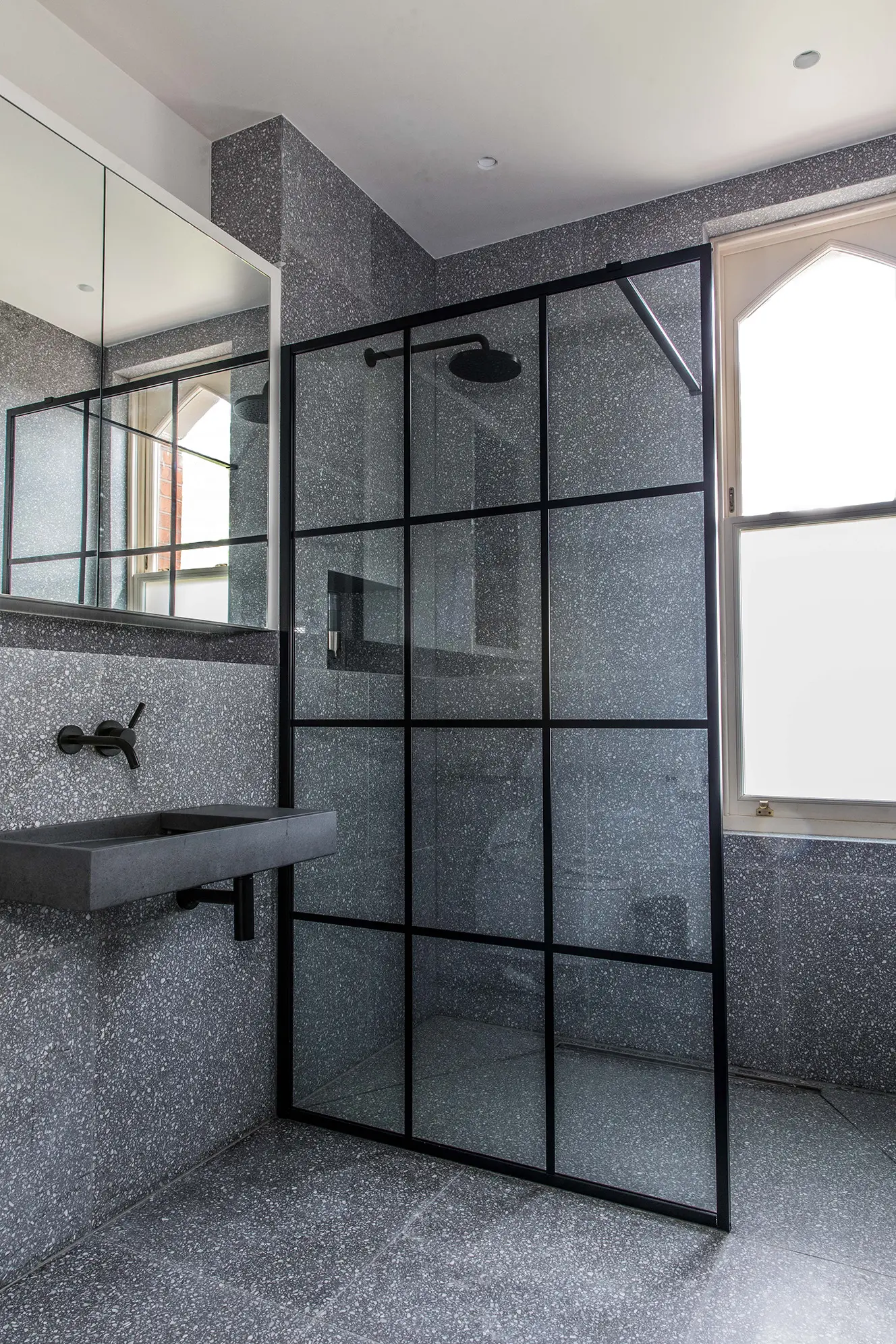
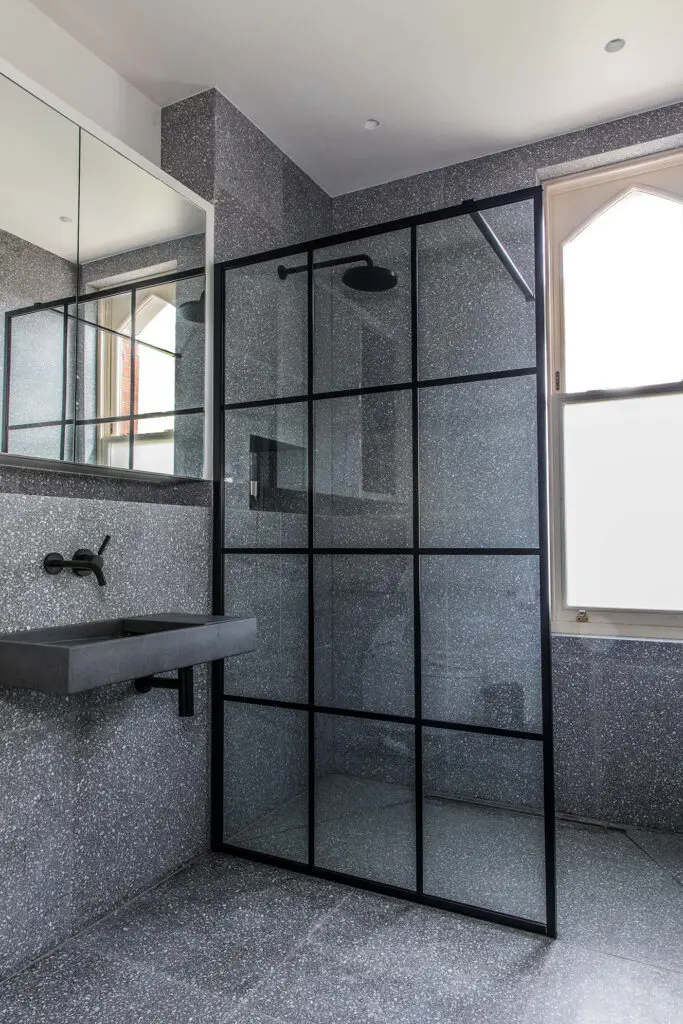
Terrazzo is a popular choice for wet environments, particularly where hygiene and creative flair are priorities. Diespeker’s terrazzo is available in both cement- and resin-based options, each with different advantages.
Resin-based terrazzo is ideal for bathrooms and spas due to its seamless application, low porosity and excellent water resistance. It also allows for a wide range of colours and finishes to match bespoke designs.
Cement-based terrazzo can also be used in wet areas, but it is more porous and typically requires more rigorous sealing and maintenance. In high-moisture zones like steam rooms or pool surrounds, resin terrazzo may offer greater longevity.
Key considerations for terrazzo in wet spaces:
* Apply anti-slip finishes for safety
* Use a high-performance sealant suited for the environment
* Ensure proper drainage to avoid water pooling
Design meets performance
Whichever material appeals most to you, the right combination of design, installation and maintenance will ensure longevity of the surfaces, their aesthetics, and their practical application in wet environments.
Diespeker offers expert advice on material choice and finish. We will provide sealing and aftercare recommendations to ensure your surfaces not only look great but stand the test of time.
If you’re planning a wet room, spa, or high-humidity commercial environment, please do get in contact. Our expertise sill help you make the right choice for long-term performance and beauty.
Contact Us
Book a Visit