
Helping you choose
What is the best material for cladding in an office environment?
For architects and designers, choosing the right cladding material for an office environment involves consideration of aesthetics, durability, maintenance – and, of course, budget.
There are plenty of materials to choose from. Among them are high-end finishes including marble, granite and terrazzo. Each of these offers distinct advantages but also potential drawbacks you should be aware of.
The article provides some helpful information to guide your decision.
Marble
Pros:
– Prestige and elegance: there’s no doubt about it, marble always exudes luxury and sophistication. It instantly elevates the aesthetic of lobbies, boardrooms, and reception areas and has been the choice of prestigious offices for many decades.
– Natural variation: each slab is unique, with unique veining and colouration. This adds a bespoke element to the design.
– Cool to the touch: marble can contribute to temperature regulation as the climate warms up.
Cons:
– Porous and soft: marble is more susceptible to staining and scratching than other natural stones. It may etch if exposed to acidic cleaners or spills. However, this is more unlikely when used for cladding as this doesn’t have the same potential exposure as other products such as countertops.
– Higher maintenance: marble requires regular sealing and to keep it looking at its best, neutral rather than off the shelf cleaning products.
– Cost: it is typically one of the more expensive options, both in material and installation.
Best for: executive spaces and reception areas where design impact is a priority and wear is minimal.
Granite
Pros:
– Highly durable: granite is the tough guy of the natural stone world. The material is extremely hard and resistant to scratches, heat and most chemicals. This makes it ideal for high-traffic areas.
– Low maintenance: granite doesn’t etch or stain as easily as marble and can be resealed less frequently.
– Variety: like marble, each slab is unique. Granit comes in a wide range of colours and patterns, including subtle tones suited to professional environments.
Cons:
– Heavy: granite requires a strong structural substrate to support its weight.
– Appearance: some people find granite a ‘cold’ surface, less warm or inviting than other finishes, particularly when grey or black tones are used.
– Cost: generally more affordable than marble, but premium granite options can still be expensive.
Best for: corridors, lift lobbies, and busy communal areas where resilience is essential.
Terrazzo
Pros:
– Customisable: while there are plenty of ‘off-the-shelf’ terrazzo designs available, it can also be bespoke made in corporate colours.
– Sustainable: increasingly, terrazzo mixes incorporate more ecofriendly materials, especially the cement or resin binders, supporting green building objectives.
– Durability: when properly sealed, terrazzo is long-lasting, resistant to wear, and easy to maintain.
– Seamless finish: pre-fabricated panels can create sleek, joint-free surfaces.
Cons:
– Design: not a true ‘con’ but creating a bespoke terrazzo can add time to project deadlines. Specifying standard terrazzo is a quicker process.
– Initial cost: depending on the terrazzo chosen, costs can be comparable to high-end natural stone.
– Cracking risk: terrazzo is more prone to cracking than natural stone so this risk needs to be factored in. For many cladding situations this will not be an issue.
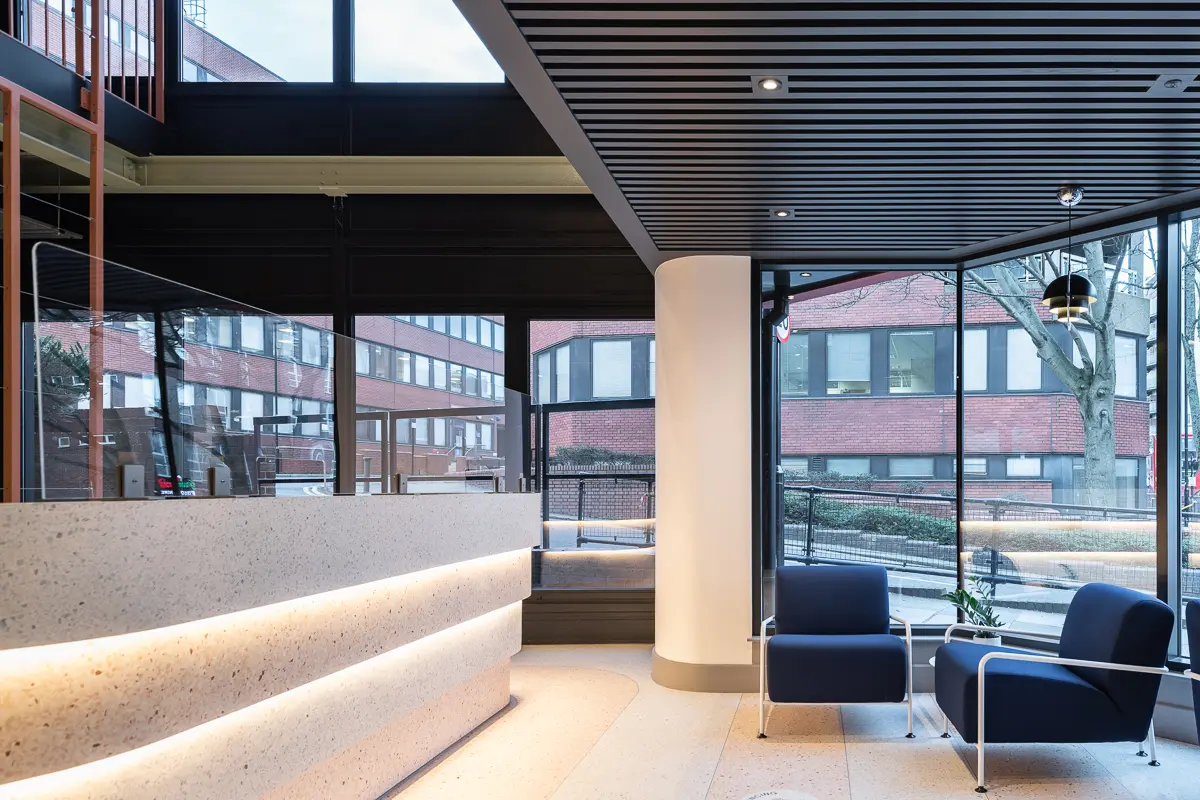
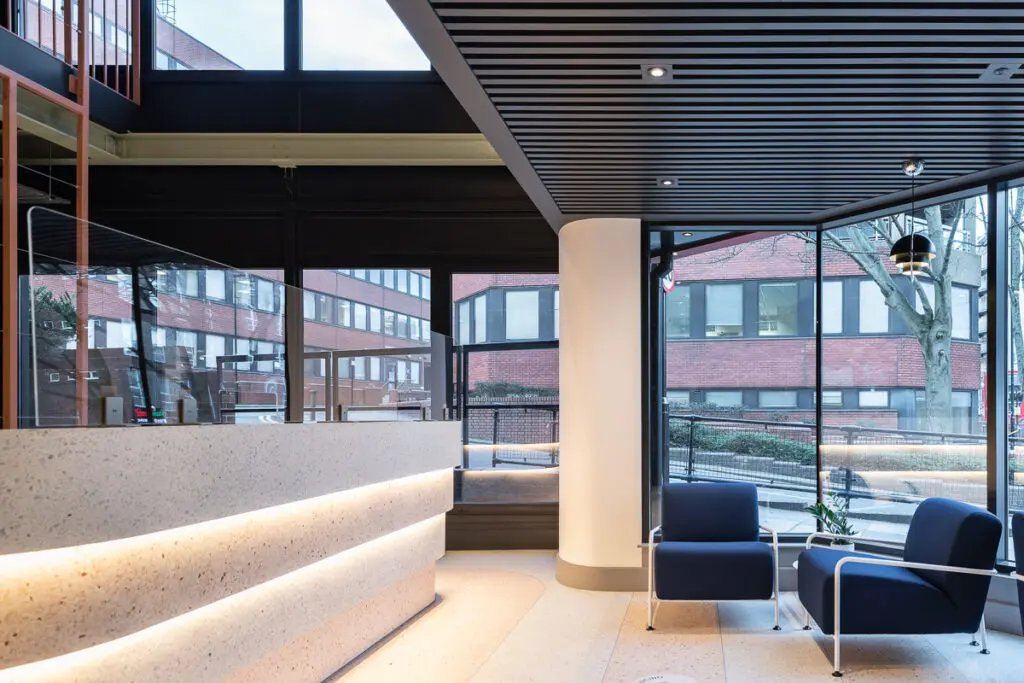
Best for: feature walls, modern reception areas, and sustainable office projects where design flexibility is a priority
Your choice
Each material has a role to play depending on the office environment’s functional and design needs:
– Choose marble for luxurious, low-traffic areas.
– Opt for granite in high-traffic zones where durability is key.
– Go with terrazzo if you want a versatile, design-led solution with elements of sustainability credentials.
Your final choice should align with both your aesthetic goals and the practical demands of the space.
Diespeker has decades of expertise in all of these materials – and more. We have thousands of slabs and examples of bespoke terrazzo available for you to view and will give you guidance to ensure you choose the best material for your project. Contact us now for no-obligation advice.